




Step-by-Step Guniting Process for Concrete Repair
Contents |
[edit] Introduction
Concrete structures naturally weaken over time due to moisture intrusion, corrosion, cracks, weather exposure, and heavy structural loads. When buildings, bridges, beams, or columns begin showing signs of deterioration, guniting becomes one of the most effective repair methods to restore strength and durability.
But what exactly happens during the guniting process?
Guniting is a concrete repair technique where a specially prepared cement mortar or concrete mix is sprayed at high velocity onto damaged concrete surfaces using compressed air. This process helps repair cracks, strengthen weakened RCC structures, and restore damaged surfaces effectively.
[edit] Why Is Guniting Used for Concrete Repair?
Damaged concrete can compromise a building’s safety and lifespan. Guniting helps by:
- Restoring structural integrity
- Repairing cracked and damaged RCC surfaces
- Preventing further concrete deterioration
- Increasing load-bearing strength
- Protecting reinforcement steel from corrosion
- Improving durability against weather and moisture
Professional guniting work contractors use advanced equipment and proper techniques to ensure maximum bonding and structural performance.
[edit] Step-by-Step Guniting Process for Concrete Repair
[edit] 1. Structural Inspection and Damage Assessment
The first step in the guniting process is identifying the extent of concrete damage.
Engineers inspect:
- Surface cracks
- Concrete spalling
- Exposed reinforcement bars
- Corrosion damage
- Structural weakness
This assessment helps determine the thickness of repair, material requirements, and the suitable guniting method for the structure.
A proper inspection ensures accurate repair planning and prevents future failures.
[edit] 2. Surface Preparation
Surface preparation is one of the most important stages in guniting.
Damaged, loose, or deteriorated concrete is removed using:
The surface is thoroughly cleaned to remove:
A clean surface ensures stronger bonding between the old concrete and new sprayed mortar.
[edit] 3. Reinforcement Treatment
In many RCC structures, steel reinforcement becomes exposed due to concrete damage.
At this stage:
- Rusted reinforcement bars are cleaned
- Corroded steel is treated with anti-corrosion coating
- Additional reinforcement may be added if required
This step improves structural strength and protects steel from future corrosion.
[edit] 4. Applying Bonding Agent
Before starting the guniting work, a bonding coat is applied to improve adhesion.
This helps:
- Increase bonding strength
- Prevent layer separation
- Improve durability of repaired concrete
A strong bond is essential for successful concrete restoration.
[edit] 5. Preparation of Guniting Material
The repair mortar or concrete mix is prepared carefully.
The mix generally contains:
- Cement
- Fine aggregates
- Water
- Polymer additives
- Strength-enhancing chemicals
The material composition depends on the repair requirements and structural condition.
Experienced guniting services providers ensure the correct mix ratio for superior durability.
[edit] 6. High-Pressure Guniting Application
This is the core stage of the repair process.
Using specialized guniting equipment, mortar is sprayed at high velocity onto the damaged surface.
The material is applied layer by layer to achieve:
- Proper thickness
- Dense compaction
- Strong adhesion
- Crack-free surface finishing
The high-pressure spraying method eliminates air gaps and ensures excellent bonding.
This technique is highly effective for:
- RCC beam repair
- Column strengthening
- Slab restoration
- Vertical wall repairs
- Overhead concrete repairs
[edit] 7. Surface Finishing
After spraying, the repaired surface is leveled and finished according to project requirements.
Depending on the application, surfaces may be:
- Smooth finished
- Rough textured
- Trowel-finished
Proper finishing enhances both durability and appearance.
[edit] 8. Curing Process
Curing is essential after guniting work.
- Prevent shrinkage cracks
- Improve concrete strength
- Increase durability
- Enhance bonding performance
The curing period generally depends on project specifications and weather conditions.
Skipping curing can reduce the effectiveness of the repair.
[edit] 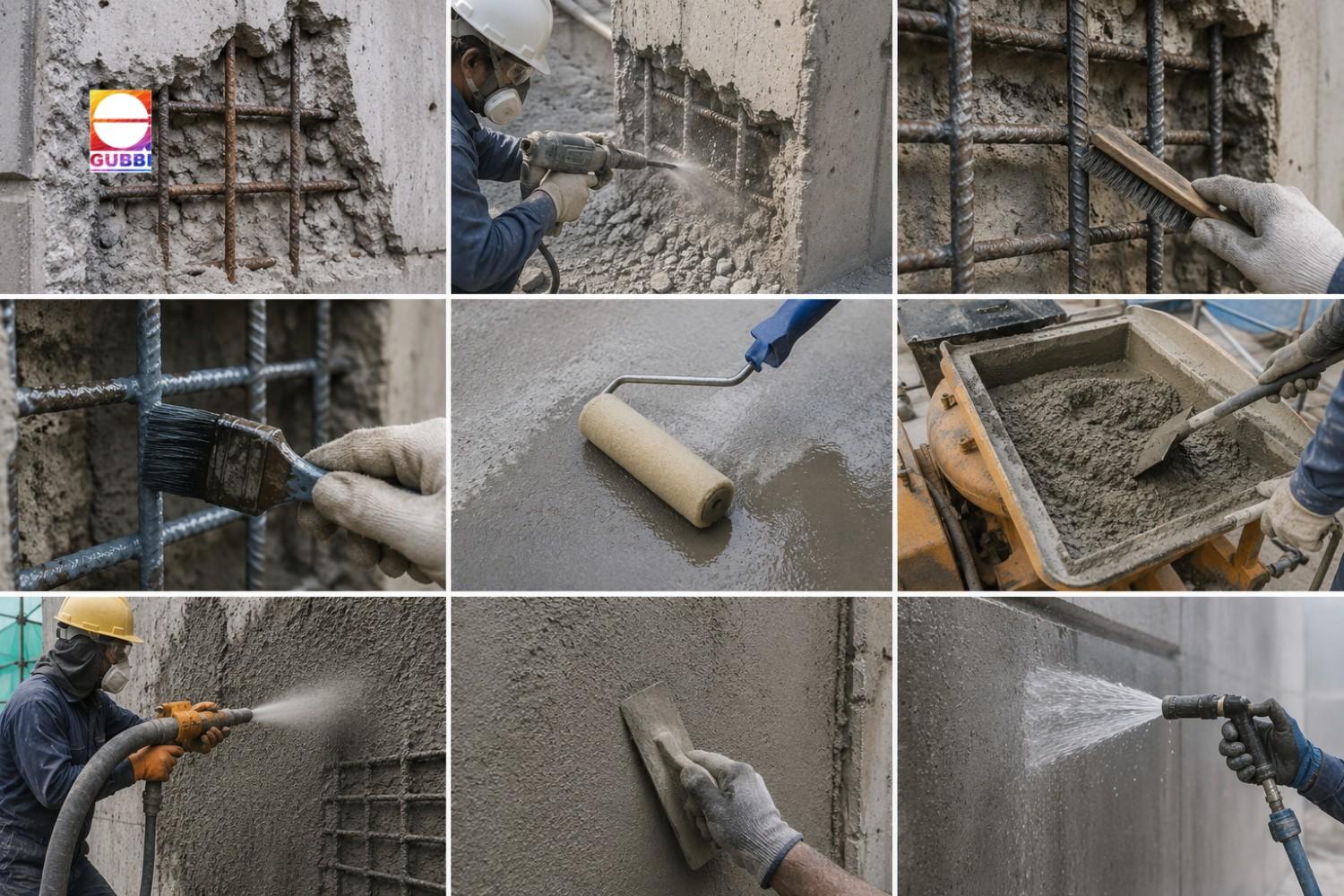
[edit] Benefits of Guniting for Concrete Repair
Here’s why guniting is considered one of the best concrete repair methods:
[edit] Faster Repair Process
Guniting allows quicker repair compared to conventional concrete placement methods.
[edit] Stronger Bonding
The high-pressure application creates excellent adhesion to existing concrete surfaces.
[edit] Increased Structural Strength
It restores damaged RCC members and improves overall load capacity.
[edit] Cost-Effective Solution
Guniting reduces demolition and reconstruction costs.
[edit] Long-Term Durability
Properly executed guniting work improves the lifespan of structures significantly.
[edit] Minimal Structural Downtime
Buildings and industrial structures can often remain partially operational during repair.
[edit] Common Applications of Guniting
Guniting is widely used for:
- Building repairs
- Commercial RCC restoration
- Industrial structures
- Water tanks
- Bridges and flyovers
- Basement wall repairs
- Parking structures
- Concrete retaining walls
It is especially useful where conventional concrete placement becomes difficult.
[edit] Signs Your Structure Needs Guniting
You may need professional guniting services if your structure shows:
- Concrete cracks
- Spalling concrete
- Exposed steel reinforcement
- Water seepage damage
- Concrete deterioration
- Structural weakening
Ignoring these warning signs can result in costly structural damage over time.
[edit] Why Hire Professional Guniting Work Contractors?
The success of concrete repair depends heavily on workmanship and material quality.
Professional contractors provide:
- Structural assessment
- Proper surface preparation
- High-quality repair materials
- Correct spraying techniques
- Long-lasting structural solutions
Experienced guniting contractors ensure better bonding, durability, and structural safety.
Featured articles
Check out some of the best features and news from Designing Buildings as well as key stories from around the web.

CIOB celebrates positive Ofsted report.

The Building Safety Regulator announces a call for evidence.

Government approach could undermine delivery and regeneration.
World's first mass timber data centre.

The overlooked environmental aspect of data centre development.
Introduction to radon awareness

New technical information sheet published by CIOB.

Updated supplier guide can help electrical contractors engage with NHP.

CIAT confirm the winners of the 2026 architectural technology awards.

Government launches a one stop shop for flood preparedness.

Sir Edwin Lutyens: Britain's greatest architect? Book review.

CIOB publishes free template to help assess and manage risks.
ECA's reflections on Party Conference season

Burnham wants to be confident of winning before asking for a fresh mandate.
New Chief Construction and Scientific Adviser

Sergio Cavalaro, Professor of Infrastructure Systems at Loughborough University.